incluso en la noticia informan que en Madrid han concedido más de 3000 visados en los 10 primeros meses, más que en 2013 (sic)..
para hacernos una idea, éste era el nivel en Francia y hispanistán:
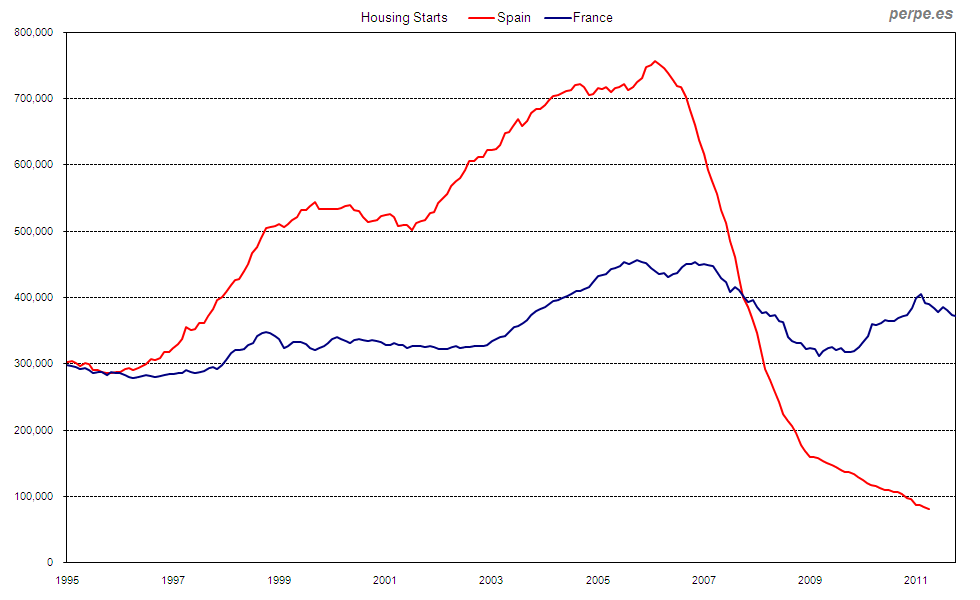
de casi 750.000 viviendas que se iniciaron en octubre de 2006, se pasó a 44.000 en 2012 y 33.000 en 2013.. sin duda son datos que demuestran que hispanistán está "en la senda de la recuperación"..
y ahora nos salen en que "hispanistán vuelve a construir".. si, claro.. siempre se va a construir.. aunque hoy haya más de 3 millones de viviendas esperando cambiar de manos.. pero esos niveles del 2006 no van a volver.. diciendo que "la crisis vino de fuera" y mirando para otro lado mientras sigue la corrupción, el nepotismo y el despilfarro no habrá recuperación..
disfruten lo votado..
After seven dormant years, Spain tiptoes back into house-building | Reuters
On a street in central Madrid, Juan Jose Perucho points to where he is going to build one of the capital's tallest residential blocks after buying a site bigger than five football pitches from the state-owned metro network.
"We've sold faster than ever before on this development," says the head of unlisted real estate company Grupo IBOSA of the project, which will feature a 25-floor tower with swimming pool and hanging gardens.
"I've seen nothing like it in all my 24 years in this business."
Spain is building again after seven years of a crushing downturn in the construction sector with investment in house-building registering its first quarterly rise since before the crisis in the three months from June to September.
But while this is a sign of Spaniards' confidence in their recovering economy, construction is unlikely to return to pre-crisis levels, leaving a shortfall in economic activity which has yet to be replaced by any other sector.
Spanish construction accounts for 5 percent of the country's output compared to 10 percent in the boom years, or an annual shortfall of about 50 billion euros (39 billion pounds), and employs less than half than before the housing crash of 2008, with no quick prospect of a sharp rebound.
At the peak of its decade-long building bonanza, Spain was putting up more houses per year than Germany, France and Italy combined. This has left a stock of 740,000 unsold new homes, hard to shift as many stand in out-of-town areas like Guadalajara and La Rioja where demand for housing is weak.
Banks, with 161 billion euros homebuilder debt weighing on balance sheets, much of it soured, are highly cautious about lending to projects and are focussing on high-end developments in Madrid and Barcelona where prices are rising.
Developers must show half the flats have been sold off-plan before sealing financing deals. They must also buy the land with their own money and put half of their own capital into building costs, lenders say.
Even under such strict conditions, the amount of projects is up from last year, mostly because of the dynamism of Madrid and Barcelona. In Madrid, the city council issued 3,131 building permits for residential use in the first 10 months of 2014, more than it awarded in the whole of 2013.
BANKS CAPTURE MORTGAGES
New building is planned for prime real estate plots like former Ministry of Defence land in the exclusive Madrid neighbourhood of Chamberi, which another unlisted property company Domo bought in November and where it plans to build 355 flats in a gated development with swimming pool and shops.
Banks see financing upmarket housing projects in big cities and providing mortgages for buyers as a good way of capturing rich clients to whom they can later sell other products and boost their falling margins.
While 80 percent of Spaniards own their home -- twice as much as the euro zone average -- the amount of new mortgages ceded has dropped to less than a tenth of its pre-crisis peak of 127,233 signed in March 2006.
"One of the big motivations to get into the developer financing business again is to capture the mortgage holder," said Joan Bertran, head of real estate developer investment at Banco Sabadell (SABE.MC).
His team is considering around 150 financing requests from house builders for projects, up from none this time last year, and has approved around eight new investments so far this quarter in Madrid and a similar amount in Barcelona, also compared to none last year.
Back at Perucho's site on the former metro land, the developer says most of the buyers are Spanish and buying flats to live in, not as an investment.
He says a larger than usual proportion are Spaniards working abroad with well-paid jobs in countries from Australia to the Gulf States in sectors like engineering -- a sign of how Spain's professionals who have travelled abroad for work during the crisis are now helping the country to recover.
This project is financed by Caixabank (CABK.MC). Other parcels of land are coming up for sale that he is interested in, like the site of the old Atletico de Madrid football club stadium on the banks of the River Manzanares in central Madrid.
"It's about a return to normal activity, it's not a boom," he says. "The market was absolutely paralysed for seven years and there is a backlog of demand."

No hay comentarios:
Publicar un comentario